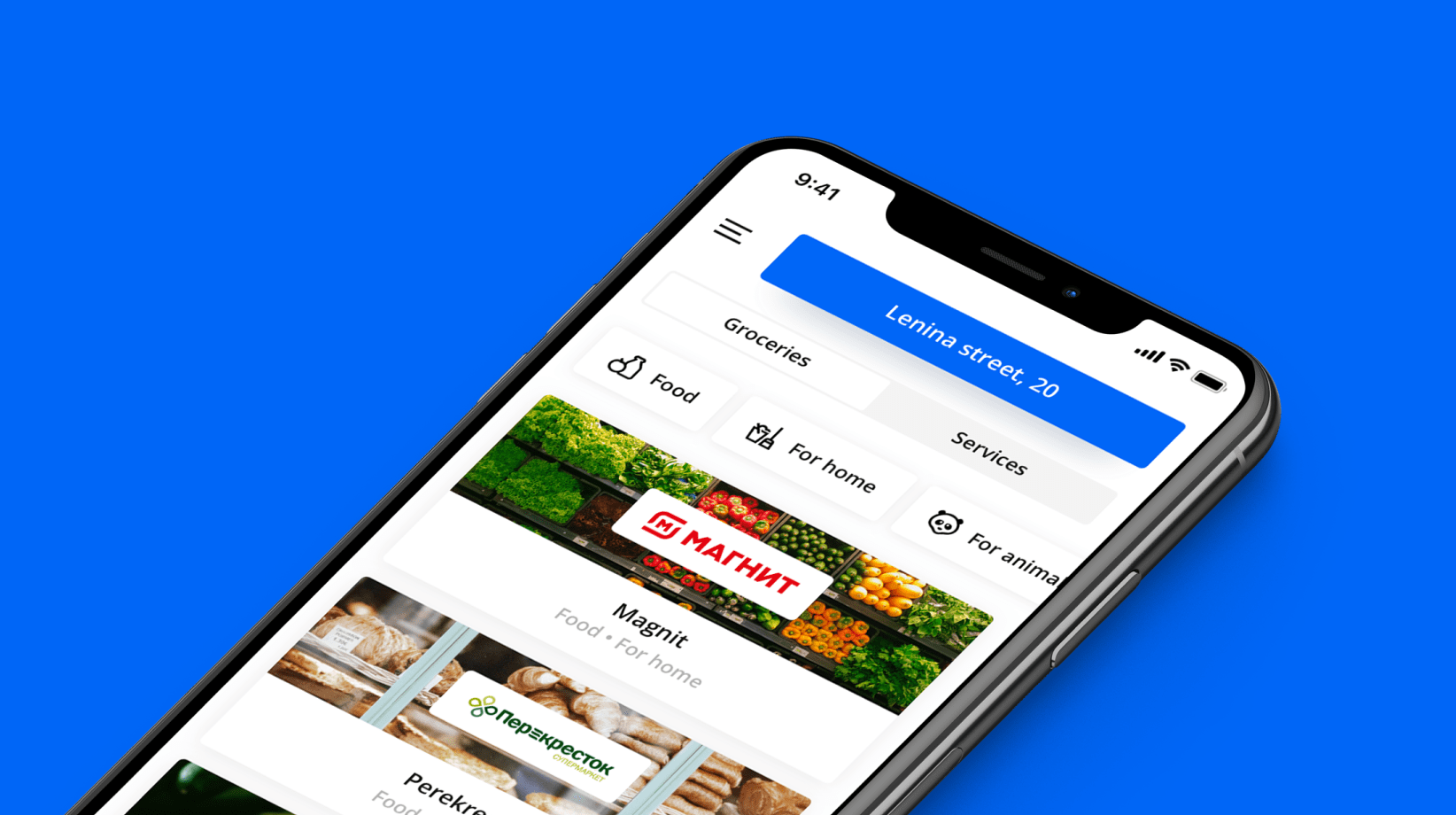
The app for express product delivery from offline stores.
2019


When the injured activates the Resero Whistle, the application server generates SOS signals. The mobile application binds the user to the Resero Whistle and contains personal information. Operators see the location of the injured and SOS signals in the administrative panel. In case of an accident, rescuers and people from the list of emergency contacts of the user get an SMS. The message contains a link to the map with the coordinates of the accident and the injured’s data. There are two channels used to ensure that SOS signals are sent and received: GSM and Lora-WAN.
During the project, my role was more of UI rather than UX designer. I led the whole UI design process for iOS and Android platforms, defended design in front of the client, and worked with our developers. Also, I created the product landing page.
SEPHORA is a French multinational retailer of personal care and beauty products. The ILE DE BEAUTE store is a part of SEPHORA and has been the Russian perfume and beauty market leader for more than ten years. ILE DE BEAUTE was the first beauty retailer to launch a mobile online store in Russia.
From 2015 to 2020, I had an opportunity to be a part of the creation of two large e-commerce apps for the Russian market — Sephora and Ile de Beaute. I was involved in the whole app development process: ideation, wireframing, prototyping, designing for both mobile platforms and working hand in hand with developers and also presenting work to a client.

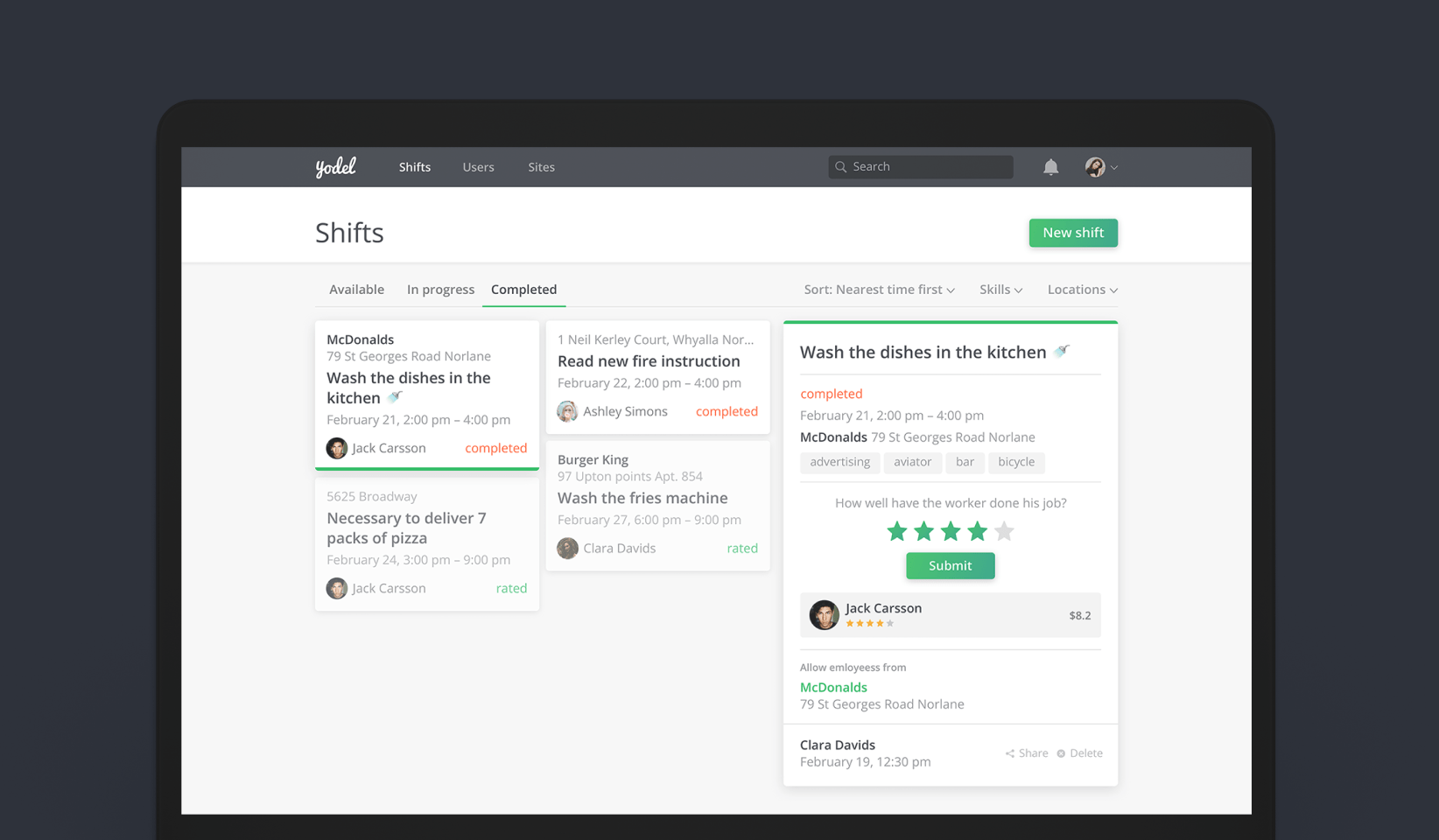
The Yodel is a mobile app for scheduling and supervising tasks without knowing beforehand who will perform them. The manager sends out work requests for the employees to either accept or reject and invites suitable candidates. Each employee is assigned to a specific location. A manager or an admin sets up a work shift – a period for the task to be carried out.
The Yodel was my first big project from scratch. I was involved in a whole app development process: ideation, wireframing, prototyping, designing for both mobile platforms and web and working hand in hand with developers, and also presenting work to a client.
The Kinogolic mobile app serves as a season ticket to cinemas in Russian cities. Having bought a subscription, the user selects a movie, showtime, and a seat, and the app forms an electronic ticket. The subscription is paid monthly with a debit or credit card attached to the app’s user profile.
During the app development process, I acted as an art director and mentor. I helped our junior designer to go through all stages of app creation: discovery, ideation, prototyping, communication with the client, working with developers, and design review.
Also, I've participated in the illustration creation process for landing. Although it was my first experience, it was gripping, and the result matched the client's expectations.


7 000+ Android users
8 000+ iOS users
2 000+ season tickets have been sold
As a side project of the Dostavista delivery service, which operates in 11 countries, Superbro was intended as the company’s way of introducing itself to the already well-developed home delivery market.
At the project's first stage, I visited the client's office in Moscow. During the week, we discussed our first steps, set up a few brainstorms, created user scenarios and reviewed our market competitors.
After, I've created a simple wireframe prototype and rapidly tested it on my coworkers, friends and family ('cause of budget, you know). Several iterations after, we agreed on the final functional prototype and moved to the UI design stage. At this stage, I closely worked with the mobile developing team that helped me create the functional, trendy and convenient app.
User retention rate was 150% higher in the app than on the website.
The app has been shut down — according to what the project’s media service told vc.ru: “the project fell short of the planned metrics.”